During your stay at our hotel we invite you to explore the magical and timeless Holy Cross region. Here, in search of spiritual forces one can take a sightseeing journey to historical places for an enchanted and unforgettable experience.
The whole region is covered with numerous castles, palaces and manor houses (Ujazd, Kurozwęki, Sobków, Chęciny), where our rich culture and history provides for interesting museums. A journey back in time to Old Polish Industrial Area will allow you to see well-preserved monuments of technology, or you can make contact with folk traditions and rituals such as can be seen at the Ethnographic Park in Tokarnia. If places of worship are on your must-see list then we suggest a trip to ¦więty Krzyż, Kałkowa-Godowa or the Cistercian trail. You can visit secluded enclaves of peace and quiet, stop next to the roadside shrines and visit the numerous smaller and larger temples and churches.
There is a wide range of recreational options; such as Kielce Racetrack, Maslow Airport, horse riding, ski runs and various interesting outdoor events. Make contact with beautiful and unspoiled nature by taking advantage of the many kilometres of hiking and biking trails or simply relax by one of the many attractive expanses of water.
Proponujemy odwiedzić:
-
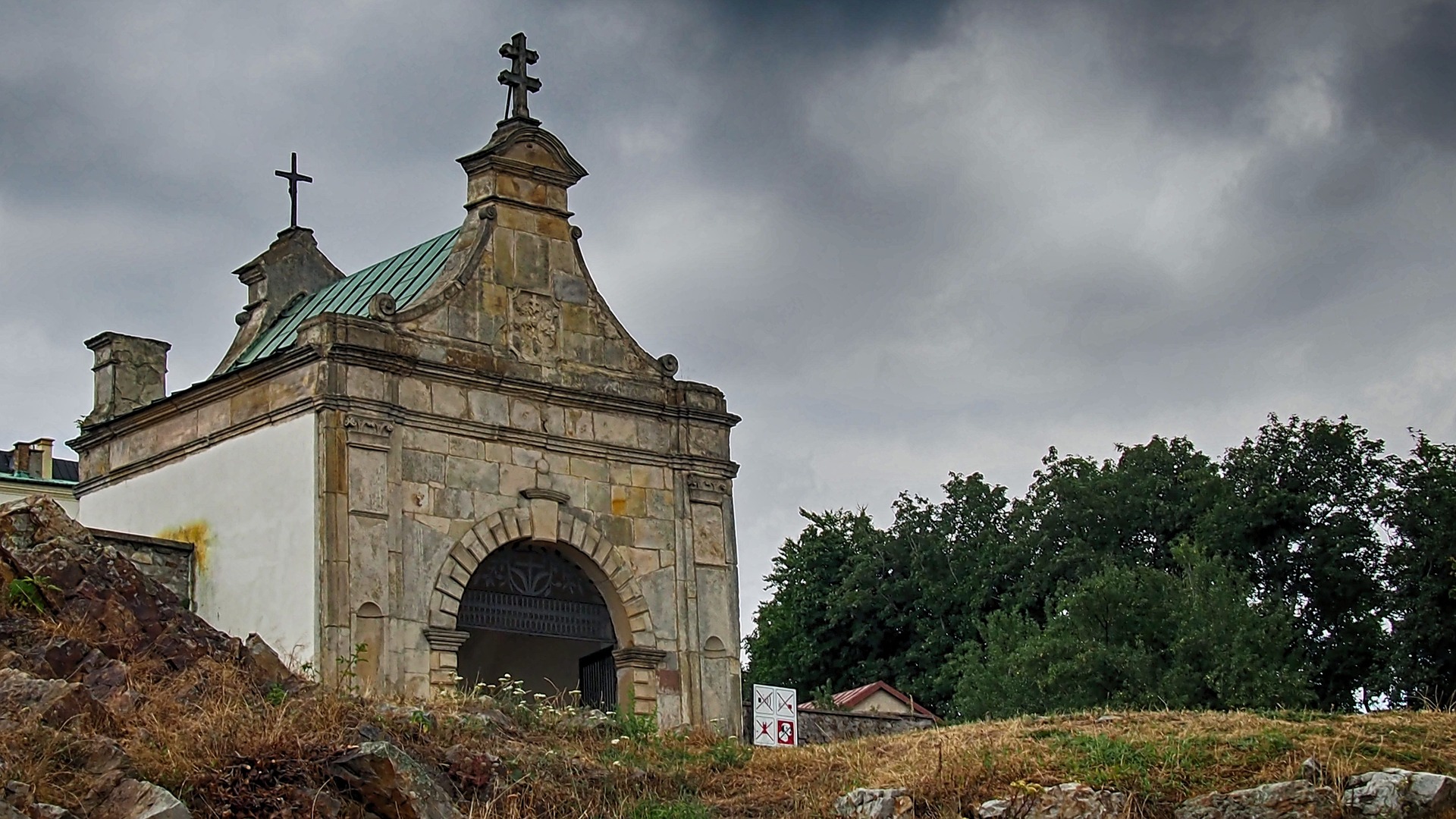
Holy Cross (Święty Krzyż)
(trip takes about 1 h)Łysiec mountain, nowadays referred to as ¦więty Krzyż mountain was especially liked by witches ages ago. The folk legend has it that during their Sabbaths witches practised witchcraft and organised hellish parties and dances. There are the Romains of a stone rampart surrounding the top of the mountain and dating back to around 9th century. Nowadays ¦więty Krzyż is famous in Poland and abroad for the Benedictine monastery and its Relics of the ¦więty Krzyż Tree. The monastery, now hosted by the Missionary Oblates, can boast of its 1000 years’ history. Visitors and pilgrims can see a Classicist church dating back to the 18th century and the chapel of the Ole¶nicki Family containing the shrine with pieces of the Holy Cross tree and a sepulchral crypt in its vaults. It is worth visiting the Museum of the Missionary Oblates of the Virgin Mary as well as seeing the exhibition of the ¦więtokrzyski National Park. Tired visitors may try the monastery cuisine and drop in an old pharmacy, now a cafe, not only to have a cup of coffee or tea, but also to buy traditional herbal medicines.
https://www.swietykrzyz.pl/ -
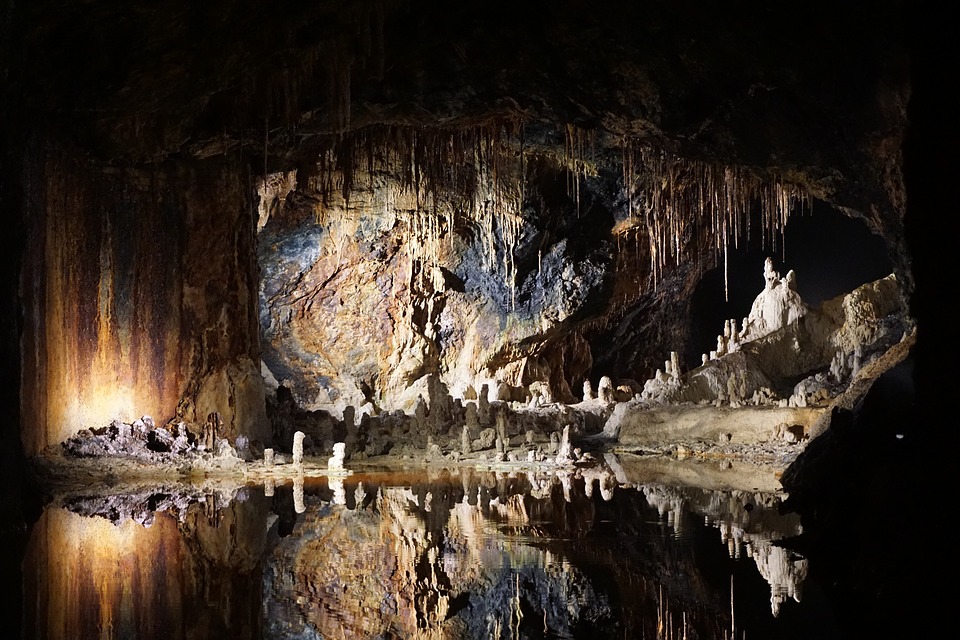
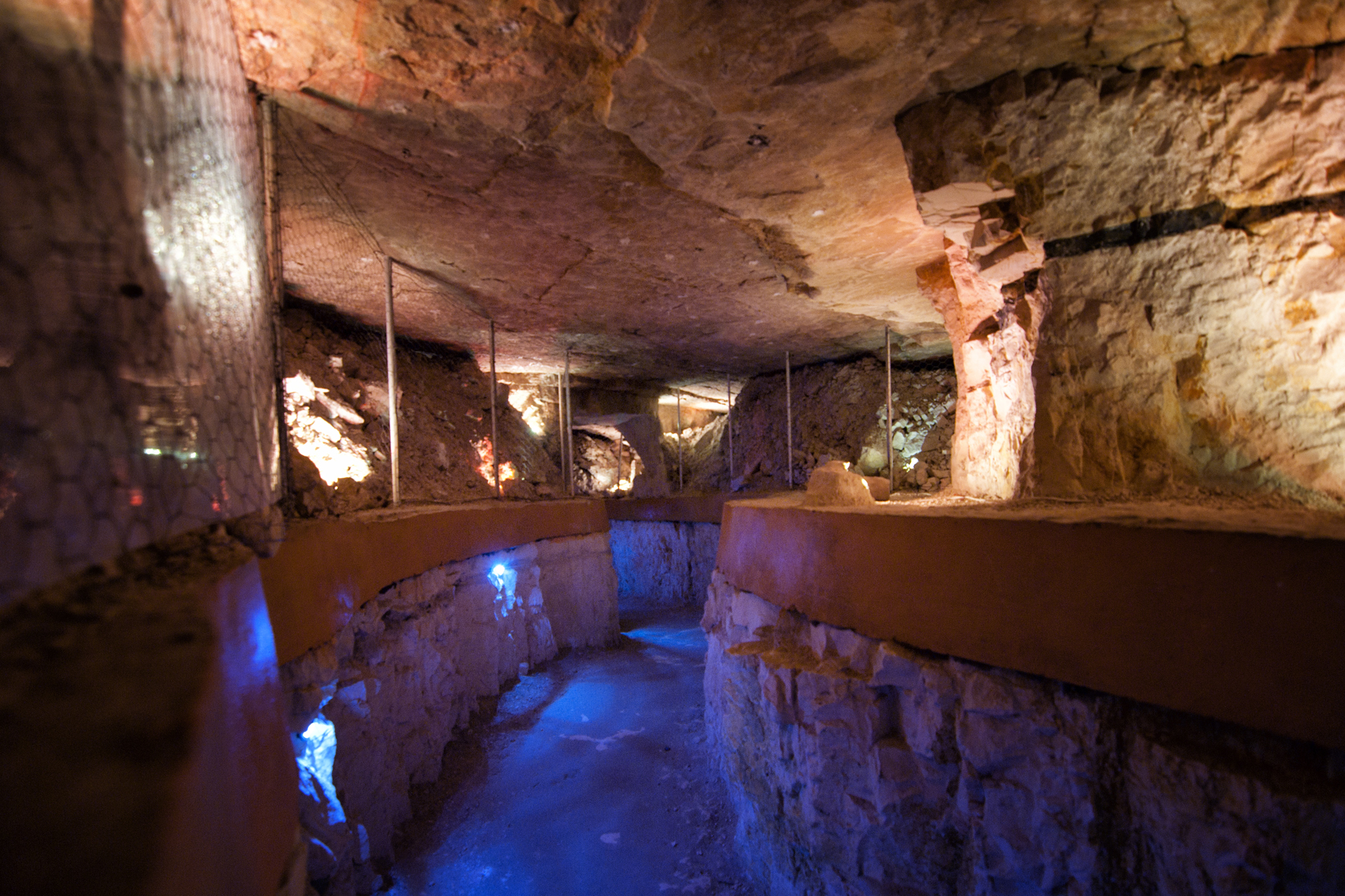
Cave "Paradise" (Jaskinia "Raj")
(trip takes about 30 min.)Paradise Cave is a typical travertine cave originated in calcium carbonate. Although small - it differs among polish caves thanks to rich and well-maintained travertine formations. It belongs the very few caves that are illuminated by an optical fibre and opened for tourists under guide's protection. The cave’s corridors were created in the Middle Devonian period in limestone that originated on the shallow sea floor ca. 360 millions years ago. Cave’s development consisted in few stages that took place mostly at the end of Tertiary and Quaternary period.
http://jaskiniaraj.pl -
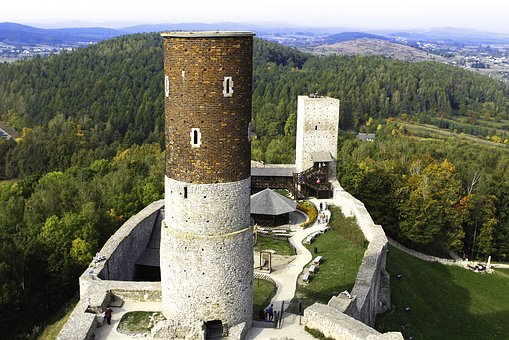
Chęciny Castle
(trip takes about 30 min.)On top of the highest rocky mountain in the environs, known as Mt Zamkowa, stands a ruin of the Gothic Royal Castle of Chęciny. It was erected before 1306, and king Władysław Łokietek, bishop Jan Muskate, and king Władysław II are mentioned as its founders. The castle is an excellent example of medieval fortress situated on an elevation. In such cases, the castle walls were fitted to the elongated shape of the elevation. The castle yard was surrounded by 9-meter-high walls a with loop-holes and parapet walks for guards. The fortress of Chęciny can be divided into two parts. The upper one was built around 1300 and is closed with two round towers with walls 2-meter-thick. The lower part was added in the late 14th century and is composed of a yard with quadrangular tower and a ogival wicket door. The locally extracted gray lime stone was used as construction material for the castle walls, although there are parts built of red and pale sandstone and brick. The towers are round and can be entered only from the upper level. The road leading into the castle was constructed close to the walls so that defenders could keep it under full control. The approaching tract was protected by a dry moat and a timber bridge that could be burnt down in case of an enemy attack. The bridge led directly into the castle gate. The massive inner tower known as donjon was the last refuge for defenders.
http://www.checiny.pl -
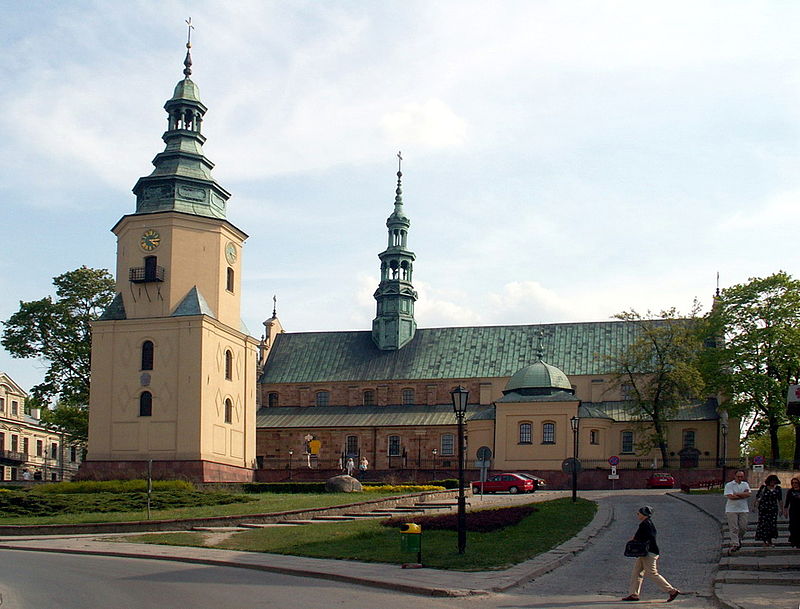
Kielce and Bishops Palace Museum
(trip takes about 15 min.).The seat of the National Museum in Kielce is a palace, which once belonged to Cracow Bishops. The Cracow Bishops’ palace was founded by Jakub Zadzik in the years 1637–1641. The bishops’ palace is one of the best-preserved monuments of architecture in Poland dating back to the times of the Waza dynasty. The rooms on the first floor retained their original interiors, beam ceilings, ceilings decorated with paintings and walls decorated with friezes. At the back of the residence, they restored a decorative Italian garden with quarter arrangement dating back to the 17th century. The Museum conducting its activities in the place houses the following permanent exhibitions: Historic Interiors of the 17th and 18th centuries; Ancient European and Polish armament, the sanctuary of the Marshal Józef Piłsudski and the Gallery of Polish Painting and Decorative Art.
http://www.kielce.pl/ -
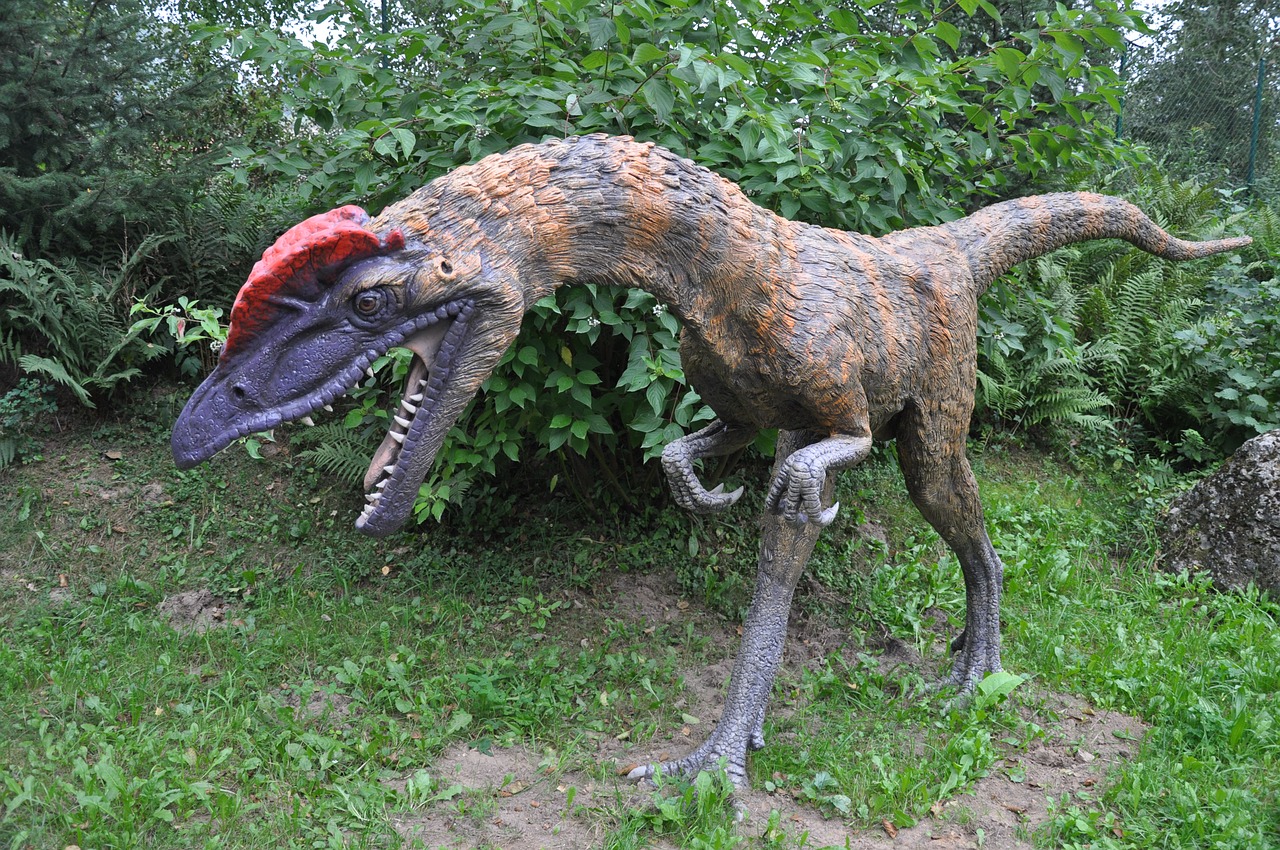
JuraPark Bałtów
(trip takes about 1 h 30 min.)Sightseeing of the park it is a journey in time through all geological periods. It begins when life appears on the Earth and ends when humans appear. The biggest attraction are the models of dinosaurs of the original size, located along the route. A special attention should be paid to the scenes from life of six zauropods and two teropodes, which were reconstructed according to the dinosaur pathways found in Sołtyków - eastward from Skarżysko Kamienna. Dinosaur models were made with enormous care for making them as similar as possible to original ancient animals. They were consulted with specialists of the Polish Geological Institute. The route makes not only a pleasure for guests, but is also aimed to play an educational role. Information standpoints are located along the trail, related to geological periods description, as well as description of characteristic features of particular dinosaur models. It is also possible to rest in shadow of trees at the time of sightseeing and look at refreshing cascades, water eyes and luxuriant, green vegetation. About 40 models of dinosaurs of the Triassic, Jurassic and Cretaceous period are exhibited nowadays in the park.
https://juraparkbaltow.pl/ -
Krzemionki Opatowskie
(trip takes about 1 h 30 min.)Krzemionki Opatowskie are neolithic and early Bronze Age complex of mines of the Upper Jurassic (Oxfordian) banded flints, located in the eastern Poland near Ostrowiec ¦więtokrzyski. It is the biggest complex of the prehistoric flint mines in Europe.
http://krzemionki.pl/ -
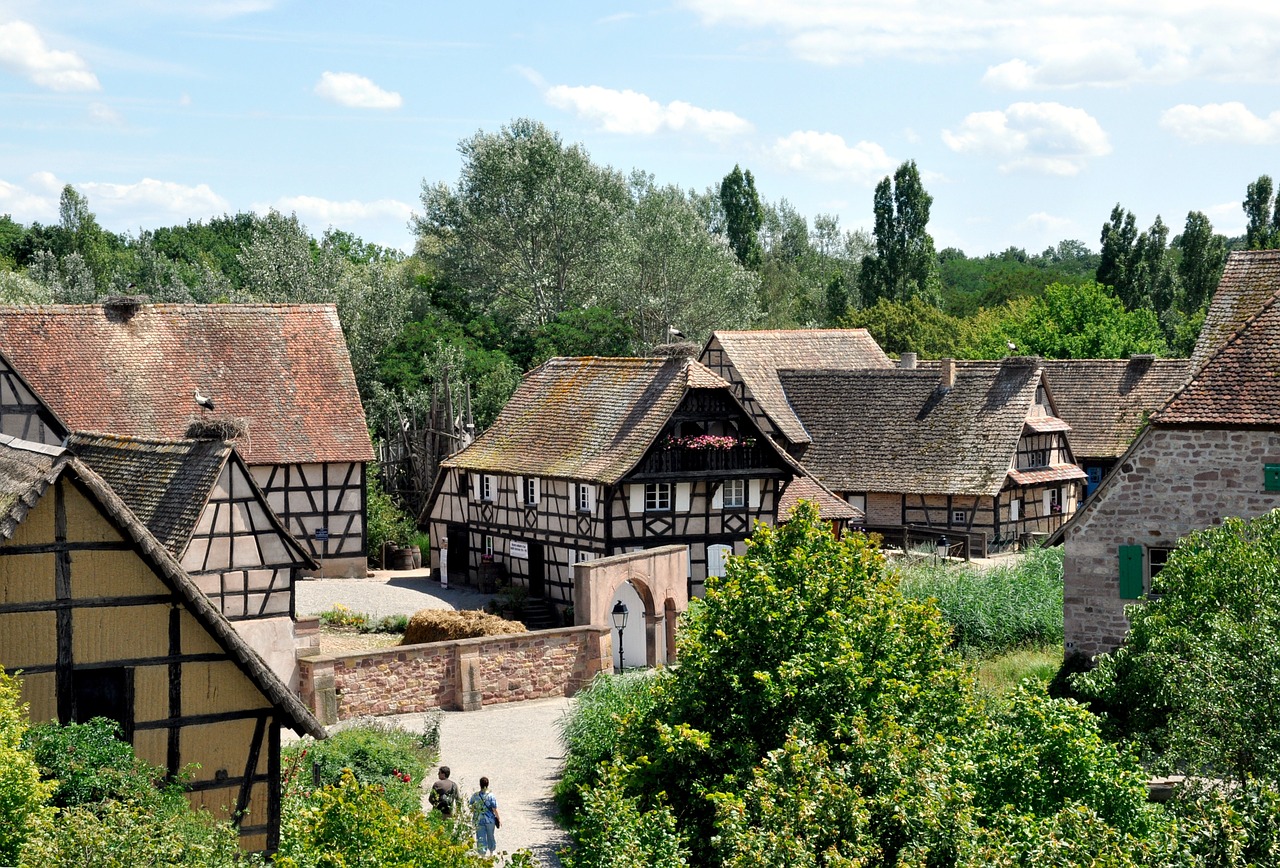
The Museum of the Kielce Region Countryside and the Ethnographic Park
(trip takes about 30 min.)The Museum of the Kielce Region Countryside and the Ethnographic Park in Tokarnia present historical wooden architecture monuments transfered from different localities of the ¦więtokrzyskie region. The museum is composed of 38 features in five sectors: small-town architecture, highlands, estate and farm, ¦więtokrzyskie architecture and loess landscape.
http://mwk.com.pl/ -
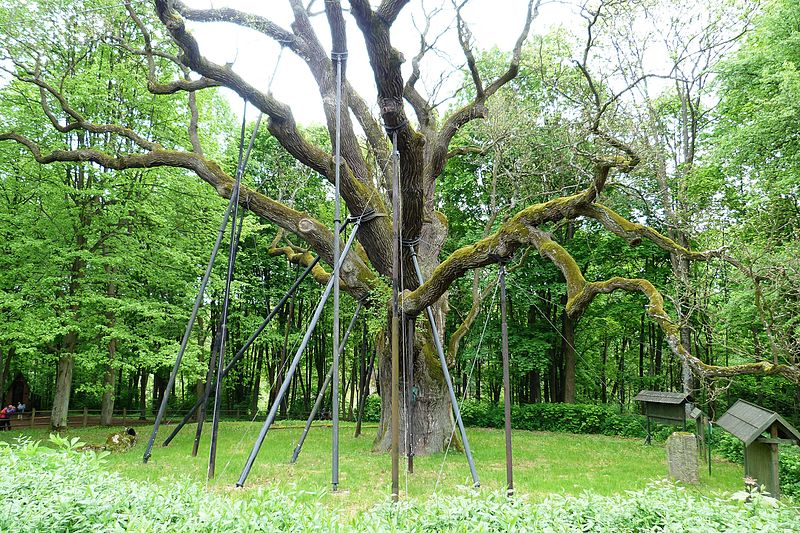
Oak Bartek
(trip takes about 15 min.)Bartek is an ancient oak tree in Poland. It grows in Zagnańsk near Kielce in the ¦więtokrzyskie Mountains. Its age, previously estimated at up to 1200 years, has recently been established to be 650–670 years, with a corer used to extract a sample for a ring count. An accurate count is impossible, as Bartek's interior has hollowed with age. There are several older trees in Poland, both oaks and yews (some over 1000 years old), yet none of them has matched Bartek's fame.
http://www.zagnansk.pl